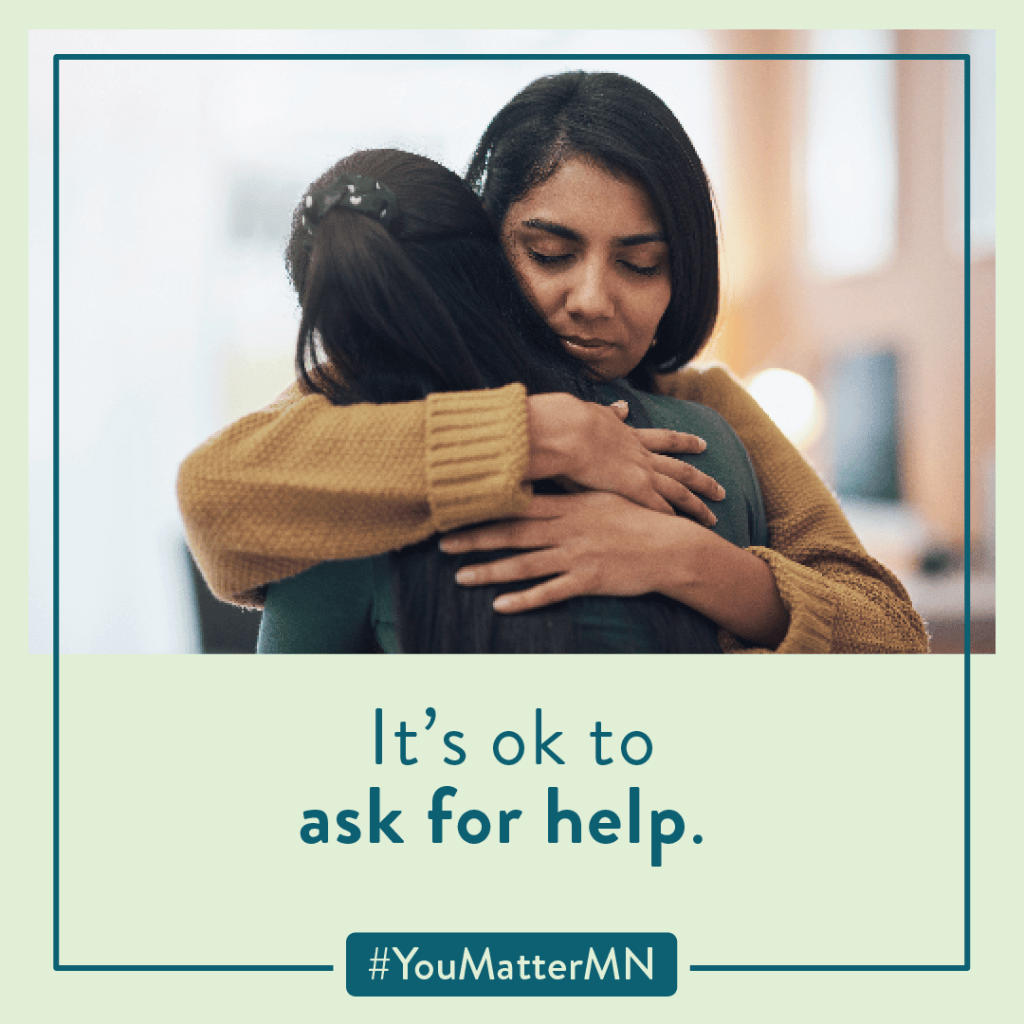
The following information is from the Minnesota Department of Health Toolkit for Suicide Prevention Awareness Month. Please follow Meinders Community Library on Facebook or subscribe to our website, meinderslibrary.com, as I will be posting additional information and resources throughout the month.
It is September, and that means the start of Suicide Prevention Awareness Month. Although mental health and suicide prevention is important to address year-round, Suicide Prevention Awareness Month provides a dedicated time for people, organizations, and communities to join their voices and share that there is hope, help is available, and healing is possible.
This year’s theme is “Changing the Narrative on Suicide” and calls to start the conversation. The aim of the theme is to raise awareness about the importance of changing the narrative surrounding mental health and suicide. Changing the narrative on how we perceive and talk about mental health and suicide requires systemic change. To make change happen, we will need to shift our culture from silence and stigma to encouragement, understanding and support.
Start the conversation with ourselves. We all have mental health and it’s as essential to a person’s life as physical health. It can be hard for individuals, families, organizations, and communities to talk about mental health. Not talking about mental health and suicide can increase the risk of people that are struggling and potentially decrease the likelihood that someone will seek help when they need it the most. Too often, public messaging conveys negative narratives about mental health and suicide. These negative narratives stigmatize mental health and suicide. Instead, a narrative of hope and resilience can influence people and lets us know that there is hope, there is help, and suicide is preventable. What we say to ourselves and others can encourage hope, celebrate life and help ourselves and others understand that help is available, suicide is preventable and mental illnesses are treatable.
Start the conversation with loved ones. If someone you know is struggling emotionally or having a hard time, talking with them can be the difference in getting them the help they need. Talking to a loved one about mental health and suicide can be an uncomfortable topic but it is also one of the best ways to prevent it. We can all take action to have these conversations with someone who may be suicidal by using the five action steps from BeThe1To.
- Ask. Asking openly and directly shows that you are willing to discuss suicide in a supportive manner. The other important part of this step is to listen to their reasons for their emotional pain as well as reasons that they want to continue to live.
- Be there. Be physically present for someone, speak with them on the phone or show up in any other way that demonstrates support for the person at risk. If you are unwilling or unable to commit to being there, talk with them to develop ideas on who else might be able to help and how they might support.
- Help keep them safe. After the “Ask” step, and you’ve determined suicide is indeed being talked about, it is important to find out a few things to establish immediate safety. The first question will be to ensure that they have not done something to harm themselves already. Secondly, you will want to ask them if they have a plan and a way to die by suicide. Knowing the answers to each of these questions can tell us the imminence and severity of danger the person is in.
- Help them connect. One way to start helping the person struggling or in crisis find ways to connect is to work with them to develop a safety plan. A safety plan is designed to guide people through a crisis, with a goal to keep them safe and get them help.
- Follow up. Make sure to follow-up with them to see how they’re doing. Leave a message, send a text, or give them a call. This is a great time to see if there is anything else that you can do to support them.
Start the conversation with community. Talking about mental health and suicide on a community-level can help raise awareness and support of suicide prevention efforts and encourage those who need extra support to connect to services. Surrounding people and families with supportive neighborhoods, businesses, communities and services is a critical way to support every person. Communities that work together in a proactive way are vital to changing the narrative about mental health and suicide. Those who have a mental illness and are at risk of suicide can be particularly affected by the language that we use. In the end, our goal is to reduce stigma so that individuals reach out for the help that they need. The heart of what we say should be respectful and place emphasis on care and concern. What we want is a positive narrative. Focus on normalizing mental health over stigma reduction. Promote help seeking and sharing support services or resources for those in need. Emphasize that suicide is preventable and there are actions individuals can take if they are having thoughts of suicide or know others who are or might be. Know the warning signs as well as risk, and equally important, know what is effective to protect individuals.
Start the conversation about mental health support resources. It is important to find the help that is right for you when your mental health feels off. Hope and healing can come from many places and in many forms. Talking about the resources available in your community and across Minnesota can help shift the narrative from shame and embarrassment to one that focuses on support and recovery. People you know can be good resources to find supports in your community. Talk to your friends and family, your primary care doctor or someone else that you can trust about what’s going on and what you are looking for. Sometimes it is nice to know that you are not alone in your struggle. Having peer support can be a great way to connect with others that may have similar experiences as you. If you are unsure about what to do and need to talk to someone, try a local or national help line to get assistance. They have trained counselors available to speak with you or your loved one and assist. Professional help can also make a big difference, but sometimes it is hard to know where to start, as there are many different types of mental health professionals. Contact 211, 988, or your local mental health center to understand what mental health resources are available in your community. Another starting point is to call the number on the back of your insurance card. They can help you identify what providers are a part of your plan. People finding hope and healing is happening every single day. Even if you’re not sure that you’d benefit from help, it can’t hurt to explore your different possibilities. THERE IS ALWAYS HOPE AND HEALING IS POSSIBLE!
I am one of four wonderful librarians here at Meinders Community Library and we have books and resources on the topic that can help you or your loved ones. Patron confidentiality is a guiding principle in library work, so please don’t be afraid to ask. I am also a survivor and an advocate, so I always have an ear to listen.
Until next time, stay happy, healthy and safe! ~Sally~